What is Agentic AI and How Does It Work?

A practical guide to agentic AI: what it is, where it fits in enterprise systems, and why adoption is accelerating now.
What you will learn in this article:
What agentic AI is and how it differs from generative AI
Why agentic AI is becoming more relevant across enterprise technology
The core capabilities that allow agentic systems to plan, decide, and act
How agentic AI works in practice using a real-world maintenance example
Where agentic AI is already being used across industries today
The risks and considerations teams should understand before adoption
How agentic AI is shaping the future of connected systems like EAM, ERP, and IoT
What is agentic AI?
Agentic AI refers to systems of multiple AI agents that can plan, make decisions, and act toward specific goals without constant human oversight. These agents don’t just process inputs. They evaluate context, make decisions based on objectives, and adjust actions based on outcomes. This behavior distinguishes them from traditional rule-based automation or standalone generative models.
In agentic models, AI systems become agents. They operate on instructions, but they can decide how to get the work done. This can mean detecting abnormal sensor readings, prioritizing a critical asset, generating a work order, checking technician availability and parts inventory, and triggering follow-up actions once the repair is complete.
This article covers how agentic AI works, where it’s already being applied, what challenges come with it, and how it’s shaping the future of enterprise tech.
Agentic AI vs Generative AI
Agentic AI and generative AI both fall under the umbrella of artificial intelligence, but they serve different purposes.
| Agentic AI | Generative AI | |
|---|---|---|
| Core Function | Decision-making + task execution | Content creation |
| Dependency | Acts autonomously in sequences | Responds to one-off prompts |
| Memory & Learning | Tracks context over time | Limited or no persistent memory |
| Example Use Case | Creating and executing maintenance work orders; adjusting inventory thresholds | Generating summaries or design drafts |
Agentic AI may use generative AI (e.g., to write a message or summarize data), but the agentic system is the one deciding when, why, and how to use it. Agentic AI works across time and inputs, meaning it continuously pulls in data from multiple sources, remembers past actions, and adjusts its behaviour as conditions change. It can track an issue from early signal to resolution, learning from each step along the way. Generative AI typically answers a single request at a time, without persistent memory or control over what happens after the response is delivered.
Why is agentic AI becoming more relevant in industrial sectors?
Industries face pressure from multiple directions: tighter regulations, labour shortages, rising energy costs, and customer expectations for speed and personalization. Reactive systems don’t scale well under these pressures.
The AI conversation has moved from "what can it generate?" to "what can it do?"
Agentic AI offers systems that proactively handle tasks, flag risks, and adapt processes. For example, it can coordinate a maintenance schedule based on current asset health and resource availability without requiring manual approval at every step.
This kind of autonomy creates real savings. Landbase reports that organizations deploying agentic systems see strong returns, with average ROI of 171% and 192% among U.S. companies[1]. In industries where timing and uptime matter, like manufacturing, utilities, logistics, and energy, agentic AI is an operational advantage and offers a way to improve reliability without increasing headcount.

What are the core capabilities of agentic AI?
Goal-driven architecture: Agents operate toward a defined outcome, manufacturer guide, business process, or policy, adjusting their actions based on success criteria.
Real-time awareness: They consume live inputs from devices, applications, and sensors to understand the current state of the equipment.
Autonomous decision-making: Agents choose the next action based on priorities, constraints, and data without needing a script. They can generate work orders, dispatch staff, send multichannel alerts, and order parts.
Process integration: They connect with other systems like EAM, ERP, WMS, GIS, and IoT platforms to make better decisions and reduce mistakes.
Feedback loops: After each action, the agent evaluates the outcome and updates its internal model to perform better next time.
These capabilities allow it to operate in dynamic environments, supporting complex workflows like supply chain optimization, field service routing, or energy grid balancing. They don’t replace human oversight, but they take over routine decisions and free teams up for higher-value work.
Autonomous decision-making: Agentic AI in action
To see what agentic AI actually does, let’s take the example of a maintenance manager at a manufacturing plant. They’re responsible for dozens of machines, each with its own schedule, history, and quirks. They use an enterprise asset management (EAM) system powered by agentic AI.
One morning, an electrical reading on a key line starts to drift out of its normal range. The system notices the change and starts making decisions.
It checks past sensor data and work order history
It identifies a likely fault which is an early sign of a bearing issue
It cross-references technician availability and inventory levels
It generates a new work order with everything needed to fix it
The technician gets the assignment on his phone along with the location, fault details, and a list of parts to bring. The warehouse manager gets the part request on their tablet with the shelf number and prepares the parts for the technician. No need to call anyone. No digging through logs. No waiting for things to fail before acting.
When the task is complete, the system logs the action and folds the data into future recommendations. Every step stays visible inside the EAM, with alerts and workflows aligned to the plant’s maintenance strategy.
This is how agentic AI works: it detects a problem and then follows through. It decides, coordinates, and hands the right action to the right person, without losing time.
Risks, limits, and considerations of agentic AI
Agentic AI brings automation closer to decision-making, but it still operates within rules, thresholds, and assumptions that people set. Knowing the constraints helps you use it better.
Context matters: Agentic AI relies on data quality and context. If sensor inputs or historical records are missing or inaccurate, decisions may fall flat.
Decision boundaries: These systems are not autonomous. They act within predefined scopes. Out-of-bounds issues still need human review. For instance, a health and safety report may be generated by an agent immediately after human approval.
Security and access control: Agentic workflows can trigger actions across multiple systems. Role-based permissions and audit trails are essential to avoid errors or misuse.
Change management: Adopting AI agents means changing how teams operate. Without buy-in and training, the system becomes another underused tool.
Cost and complexity: Deploying agentic AI within enterprise environments (like ERP or EAM systems) requires integration, testing, and ongoing calibration.
That’s why many implementations start with pilot programs and expand based on performance.
Where agentic AI is already making a difference
Agentic AI isn’t limited to experimental labs or one-off pilots. It’s already embedded in the workflows of major industries:
Manufacturing
Energy and utilities
Government services
Healthcare
Insurance
Financial services
Legal
Telecommunications
Retail
These sectors are using agentic systems to manage claims, flag fraud, route service requests, monitor asset performance, and more. The technology is moving past proof of concept and into enterprise strategy.
According to Landbase, 33% of enterprise applications will feature agentic AI by 2028[2]. As business systems evolve from static logic to adaptive behavior, agentic AI is becoming a standard feature.

What does the future of agentic AI look like?
Agentic AI has already moved from concept to implementation. Soon, these systems will be integral to core business platforms, integrated into workflows instead of being separate tools. This shift is about fulfilling actual needs, not just hype.
Teams will depend on agents to oversee assets, automate decisions, and coordinate across systems without adding complexity. As adoption increases, companies will judge success not only by AI’s insights but by how well it acts on them. Agentic AI is becoming a part of daily operations.
With an agentic workflow builder, enterprises can create tailored ecosystems by customizing agents according to their specific business processes, data, and policies. They can select the algorithm that best fits their needs and switch to another one depending on the specific task. In the future, agentic AI will continue to become increasingly effective and personalized.
Its true value is in its consistent, flexible, and reliable presence, not just in promises.
Agentic AI is already working behind the scenes
Most AI today is like a calculator: you ask a question, and it gives an answer. Agentic AI is different. Think of it as software that can set its own goals, figure out the steps to reach them, and get things done on its own. Instead of waiting for your every command, it keeps working until the job is finished.
The shift is already underway. According to Landbase, 79% of enterprises report at least some level of AI agent adoption, and 96% are planning to increase investment[3]. Confidence is high, and the use cases keep growing.
Bring agentic AI to the field with TAG Mobi and mobiMentor AI
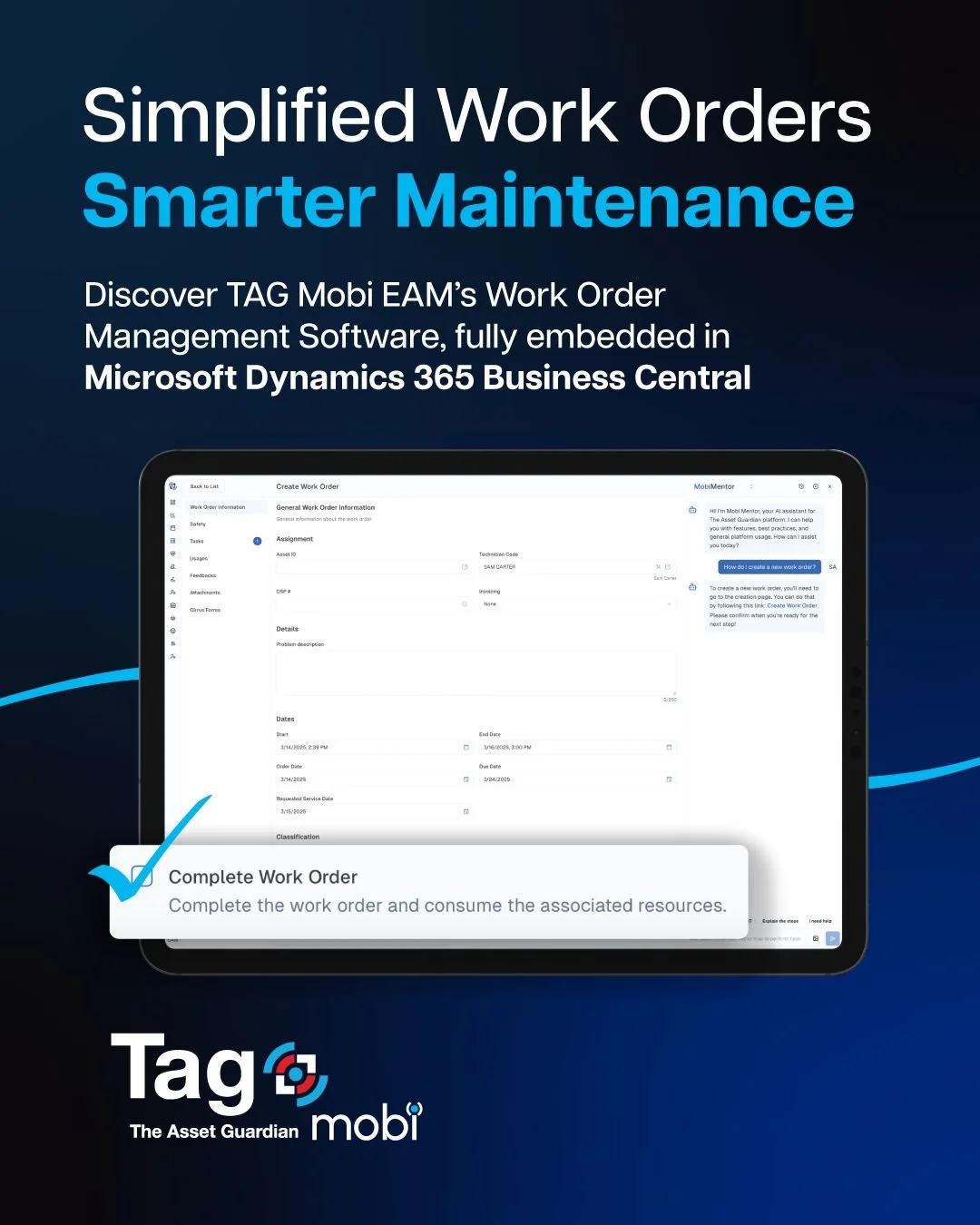
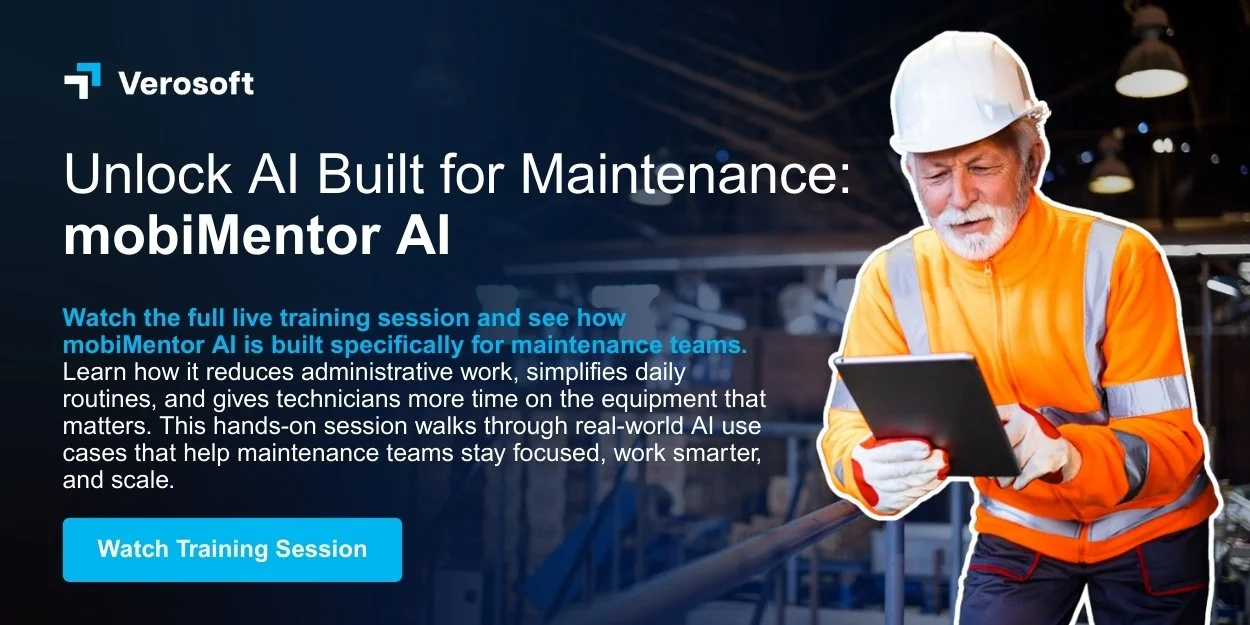
For asset-intensive organizations, that future is already within reach. Tools like TAG’s mobiMentor AI and agentic workflow builder bring those capabilities directly into the field, automating routine tasks, guiding technicians through decisions, and triggering workflows based on real-time data.
It’s a practical way to scale operational intelligence without adding more complexity. Try a free interactive demo to experience how easy it is to manage asset performance with TAG’s mobiMentor AI.
[1] Source: www.landbase.com/blog/agentic-ai-statistics
[2] Source: www.landbase.com/blog/agentic-ai-statistics
[3] Source: www.landbase.com/blog/agentic-ai-statistics