How to Use Predictive Maintenance to Protect Renewable Energy Assets
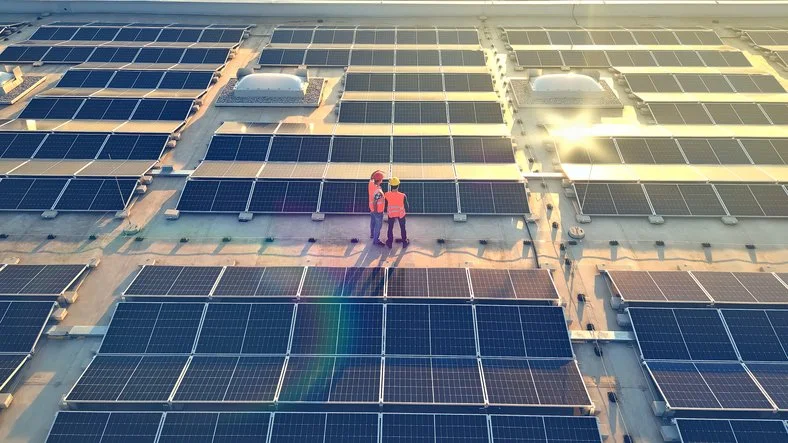
Use predictive maintenance to detect renewable asset issues early and turn IoT and SCADA data into work orders.
What you will learn in this article:
What predictive maintenance is and which renewable asset data it uses
How to turn asset signals into work orders using rules, thresholds, and alert filtering
How to reduce alert noise so teams act on the signals that matter
Why predictive maintenance matters now as portfolios grow and assets age
Which renewable assets to monitor, from inverters and BESS to transformers and substations
How EAM, IoT, and ERP work together to connect asset condition to maintenance and cost
If you are a renewable energy operator, you already know how much IoT sensor data your assets produce every day. Solar farms, BESS sites, substations, transformers, inverters and SCADA systems are constantly sending signals: temperature, voltage, current, state of charge, production output, equipment status, and alarms.
The hard part is filtering the massive influx of data into maintenance action before it's too late. A sensor may detect a temperature issue. SCADA may repeat the same alarm, and a battery cabinet, inverter, tracker, or transformer may show early warning signs before performance drops. But when those signals stay in separate dashboards, spreadsheets, or alarm logs, maintenance teams can miss the chance to act early.
Predictive maintenance helps close that gap. By connecting sensor data, SCADA alarms, and equipment conditions to asset management and work order workflows, renewable energy teams can detect issues earlier, reduce alert noise, and respond before small problems affect production, capacity, or site availab
In this article, you will learn how to use predictive maintenance to protect renewable energy assets: what it is, why it matters now, which assets to monitor, and how to turn the IoT data you already collect into maintenance work.
What is predictive maintenance?
Predictive maintenance uses IoT sensor data, connected equipment, and operational trends to help maintenance teams identify asset issues before failure occurs.
In renewable energy, predictive maintenance may use data from:
SCADA systems
Temperature sensors
Vibration sensors
Voltage and current readings
Power output data
State of charge data
Battery management systems
Weather data
Runtime counters
Fault codes
Alarm histories
Inspection results
Work order history
This data only matters if it changes what your team does. It should tell you what to inspect, what to repair, and what can wait. Predictive maintenance works best when IoT data is connected to an EAM system. This allows teams to move from monitoring to action.
Why is predictive maintenance crucial in renewable energy?
Renewable energy operators need predictive maintenance now because portfolios are growing, assets are aging, and maintenance teams need to protect uptime with limited resources.
Global renewable electricity capacity is expected to grow 2.7 times by 2030, with solar PV and wind accounting for 95% of that growth[1]. As more solar farms, BESS sites, substations, transformers, and grid-connected assets come online, operators need maintenance processes that can scale.
Renewable energy assets create three major monitoring challenges:
They are distributed: Assets may be spread across solar fields, battery sites, wind farms, and substations.
They are data-heavy: SCADA systems and sensors can produce thousands of signals.
They are revenue-sensitive: Downtime affects production, availability, and contract performance.
A manual approach does not scale well when teams are responsible for:
Multiple sites
Remote locations
Large volumes of alarms
Production and availability targets
Safety and compliance requirements
In many renewable operations, the IoT data already exists. The issue is that data often sits in SCADA systems, spreadsheets, OEM portals, or monitoring dashboards without a direct link to maintenance work. That delay can affect both reliability and financial performance.
A recurring inverter fault may reduce production before a team investigates it. A battery anomaly may lower available capacity or create safety concerns. A transformer warning may point to a costly issue that needs attention before it affects a wider part of the site.
Predictive maintenance built on IoT data helps teams act sooner and with better context.

How does predictive maintenance improve renewable energy asset management?
Predictive maintenance improves renewable energy asset management by connecting IoT asset condition data to maintenance planning, work orders, history, and cost tracking.
Traditional asset management often depends on scheduled maintenance and reactive repairs. Those methods still have a place, but renewable assets need more context. Maintenance teams need to know which assets are showing early signs of risk, which alerts matter, and which work should be prioritized.
Good asset management depends on accurate asset information. Predictive maintenance adds real-time condition data to that picture.
What renewable assets should maintenance teams monitor?
Renewable energy operators should monitor the assets that have the greatest impact on production, safety, reliability, and repair cost.
The exact list depends on the asset mix, but common examples include:
Not every signal needs to create a work order. The value comes from defining which signals matter, when they matter, and what action should follow.
How does predictive maintenance turn monitoring into action?
Predictive maintenance with IoT turns monitoring into maintenance action by connecting asset signals to rules, thresholds, workflows, and work orders.
A practical process looks like this:
Collect asset data: Sensors, SCADA systems, and connected equipment send operating data.
Map signals to assets: Each device, data point, or alarm is linked to the correct asset record.
Define rules and thresholds: Teams decide which conditions require attention, such as high temperature, repeated fault codes, abnormal vibration, or declining output.
Filter alert noise: Suppression windows, severity levels, and deduplication help prevent teams from being overwhelmed by repeat alarms.
Create work orders when needed: When a condition meets the defined rule, the EAM system can generate a work order with asset context, instructions, priority, and routing.
Track the full maintenance history: The asset record keeps the condition, work order, response, repair, cost, and result.
This connection is what many renewable operations are missing. Monitoring shows what is happening. Asset management ensures someone acts on it.
Starting small is often better than trying to connect every signal at once. Focus on a small number of high-value assets (inverters, transformers, battery cabinets, turbines, or substations) and clear maintenance actions. A focused pilot can prove value, improve internal confidence, and create a repeatable model for other sites.

Why is alert noise a major problem?
Alert noise is a major problem because renewable energy systems can generate too many alarms for teams to review manually.
A large renewable site may produce thousands of data points. Some alarms are urgent. Others are repeated, temporary, low-risk, or caused by communication issues. When every alert looks important, teams can miss the signals that need action.
Alert flood control helps by using:
Severity tiers
Suppression windows
Deduplication
Hysteresis
Asset criticality
Site-specific thresholds
Rule tuning
Escalation paths
Done well, this cuts noise without burying the alarms that matter.
How does predictive maintenance change maintenance scheduling?
Predictive maintenance does not remove the need for preventive maintenance. It helps teams decide when scheduled work should be adjusted based on actual asset condition. For example:
A solar inverter with recurring temperature faults may need inspection before the next scheduled visit.
A wind turbine with rising vibration trends may need further analysis before a major component is damaged.
A battery cabinet with repeated thermal anomalies may need immediate review.
A transformer with abnormal readings may require inspection before it affects the wider site.
This approach helps maintenance teams move from fixed schedules to risk-based decisions.
Where do EAM, IoT, and ERP fit together?
EAM, IoT, and ERP work together by connecting asset condition, maintenance execution, and business impact.
In renewable energy, an IoT signal often starts as an operational issue. It becomes more valuable when it is connected to maintenance and cost data.
This connection matters because maintenance teams do not only need to know that something happened. They need to know what work was done, which parts were used, how long the asset was down, and what the issue cost.
The risk to avoid is treating IoT monitoring as a separate dashboard with no link to maintenance execution. A dashboard can show an issue, but it does not guarantee action. Teams still need a clear process for ownership, priority, dispatch, repair, and follow-up.
What role does TAG Mobi IoT play?
TAG Mobi IoT helps renewable operators turn asset signals into automated maintenance actions.
It connects IoT, SCADA, and sensor data to asset records and work order workflows in TAG Mobi EAM, inside Microsoft Dynamics 365 Business Central. This helps teams detect issues earlier, reduce alert noise, and manage maintenance from the same system used for asset history, parts, labor, and reporting.
TAG Mobi IoT supports renewable energy teams with:
Signals to work orders: Convert equipment conditions into automated maintenance work when rules or thresholds are met.
Fast onboarding and device-to-asset mapping: Link devices, data points, and assets using mapping tools, imports, and templates.
Alert flood control: Reduce duplicate alerts and prioritize the signals that need attention.
Configurable predictive and anomaly detection: Use counters, trends, deviation rules, and AI-driven workflows where needed.
Multi-site governance and dashboards: Monitor asset health, exceptions, and maintenance activity across sites.
For renewable operators, the value is practical. Teams can move faster from “something changed” to “someone is assigned to fix it.”
Putting predictive maintenance to work
Most renewable sites already have the data but lack the link between an IoT sensor reading and a maintenance technician showing up to fix the problem.
That gap costs you. A recurring inverter fault drags down production for weeks before anyone opens a ticket. A battery cabinet runs hot and nobody knows until capacity drops. Predictive maintenance closes the loop. It reads asset condition, decides what matters, and puts the right work in front of the right technician before a small fault becomes an outage.
You need your existing IoT and SCADA signals tied to work orders, asset history, and cost, not more dashboards.
That is what TAG Mobi does. It turns live equipment signals into maintenance action inside Microsoft Dynamics 365 Business Central, so monitoring, predictive maintenance, and work order management all run in one system.
See it on your own assets. Book a demo and watch TAG Mobi turn a real equipment signal into a work order.

FAQ
What is the difference between preventive and predictive maintenance?
Preventive maintenance is scheduled based on time, usage, or standard intervals. Predictive maintenance uses asset condition data to identify when maintenance is needed before a failure occurs.
Can IoT data automatically create work orders?
Yes. IoT data can automatically create work orders when defined rules, thresholds, or AI-driven workflows indicate that action is required. This helps reduce manual follow-up and improves response time.
What renewable assets benefit most from predictive maintenance?
Wind turbines, solar inverters, battery energy storage systems, transformers, substations, and trackers can all benefit from predictive maintenance. The best starting point is usually the asset group with the highest downtime impact or repair cost.
[1] Source: www.iea.org