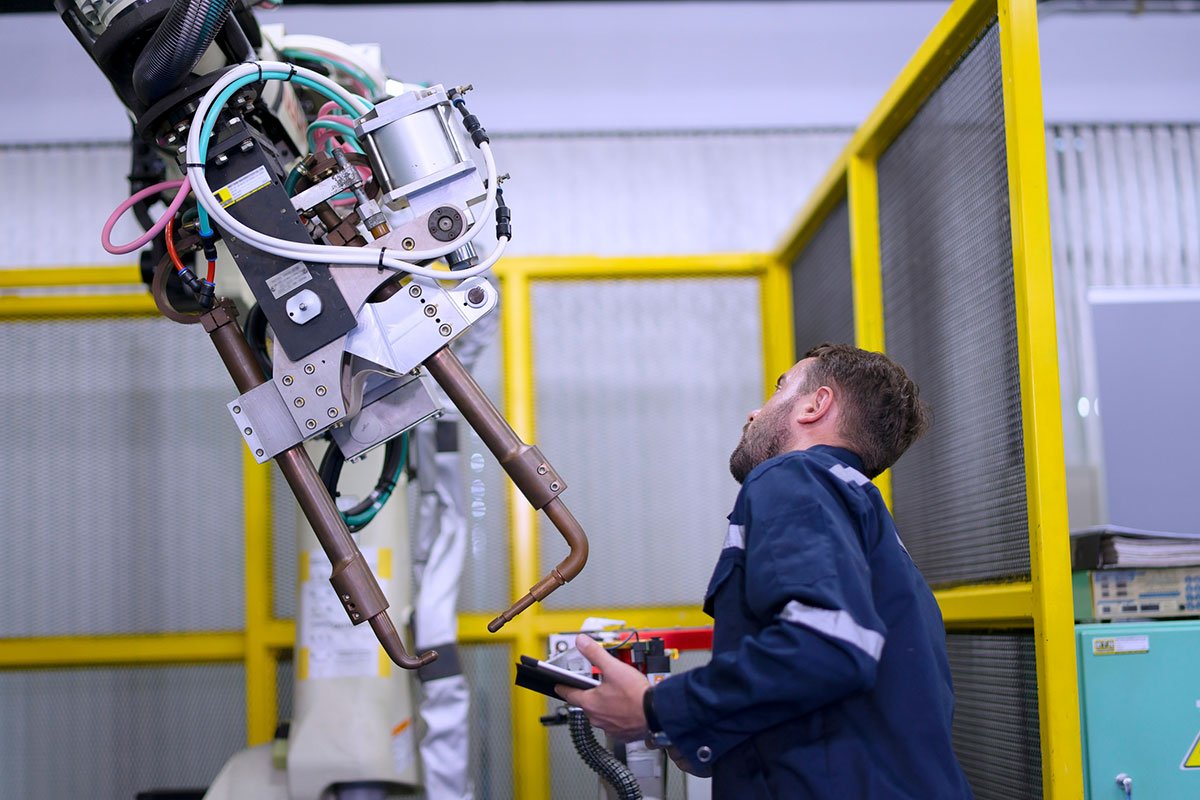
Learn how to calculate MTTF and use it to plan component replacements, manage spare parts, and support maintenance decisions.
What you will learn in this article:
What mean time to failure (MTTF) measures and how it applies to non-repairable components.
How to calculate MTTF using the mean time to failure formula and a worked example.
The difference between MTTF, MTBF, and MTTR and when to use each reliability metric.
How maintenance teams use MTTF to plan component replacements and manage spare parts.
How censored data and statistical models affect MTTF calculations.
How accurate EAM data supports reliability tracking, maintenance planning, and asset lifecycle decisions.
Mean time to failure (MTTF) is a reliability metric that measures the expected operating time until failure for non-repairable components or assets. For maintenance and reliability teams, understanding MTTF helps distinguish lifecycle planning for disposable parts from reliability tracking for repairable equipment.
Using the correct reliability metric supports replacement schedules, spare parts planning, and total cost of ownership estimates. Confusing MTTF with mean time between failures (MTBF), however, can lead to misleading reliability assessments and poor maintenance decisions.
This article explains what mean time to failure measures, how to calculate MTTF using practical examples, and how maintenance teams can use the results to support asset replacement and lifecycle planning.
What is mean time to failure (MTTF), and what does it measure?
Mean time to failure measures the average operating time until failure for components or assets that are not repaired, such as fuses, light bulbs, or sealed sensors. It estimates the typical operating hours before a component fails and is removed from service.
MTTF is used to evaluate component lifespan, forecast end-of-life replacements, and support warranty estimates.
For example, an MTTF of 10,000 hours means a group of similar components is expected to operate for an average of 10,000 hours before failure. Some components may fail earlier, while others may last considerably longer.
MTTF is an average, not a guaranteed replacement date.
For repairable equipment that can be restored to service after failure, maintenance teams typically use mean time between failures (MTBF) and mean time to repair (MTTR).
MTTF vs. MTBF vs. MTTR: What's the difference?
Each of these reliablity metrics measures a different aspect of equipment performance and maintenance.
Mean time to failure (MTTF) applies to non-repairable components, where failure ends the item's useful life. Mean time between failures (MTBF) applies to repairable equipment that can be returned to service. Mean time to repair (MTTR) measures the average time required to restore equipment after a failure.
| Metric | What it measures | Primary use |
|---|---|---|
| MTTF (Mean Time to Failure) | Average operating time until failure for non-repairable components | Replacement planning, component lifespan, and spare parts |
| MTBF (Mean Time Between Failures) | Average operating time between failures of repairable equipment | Reliability monitoring and maintenance planning |
| MTTR (Mean Time to Repair) | Average time required to repair or restore failed equipment | Repair performance and equipment availability |
For example, a manufacturing facility might use MTTF to estimate when sealed sensors need replacement, MTBF to track recurring failures on a production machine, and MTTR to measure how long technicians take to restore that machine.
For repairable systems operating under steady conditions, MTBF and MTTR can also be used to estimate availability:
Availability ≈ MTBF / (MTBF + MTTR) × 100%
This simplified calculation assumes MTBF measures operating time and MTTR measures the corresponding downtime between operating periods.
How do you calculate mean time to failure?
To calculate mean time to failure, you average the operating time until failure for a group of similar, non-repairable components.
The simplest MTTF calculation uses the recorded operating hours of each component, provided all units in the dataset have failed.
What is the mean time to failure formula?
The basic mean time to failure formula is:
MTTF = Total operating time until failure / Number of failed units
Or, expressed mathematically:
MTTF = ΣTi / N
Where:
Ti: Operating time until failure for each component.
N: Number of components that failed.
Σ: Sum of all individual operating times until failure.
This calculation works when the complete operating life of every component in the group is known. If some components are still operating, a different method may be needed to avoid inaccurate results.
Example: How to calculate MTTF
Five identical, non-repairable sensors failed after 800, 1,200, 1,000, 900, and 1,100 operating hours.
To calculate the MTTF, follow these steps:
Add the operating times: 800 + 1,200 + 1,000 + 900 + 1,100 = 5,000 hours.
Count the failed units: N = 5.
Calculate MTTF: 5,000 / 5 = 1,000 hours.
MTTF = 1,000 operating hours
Interpretation: The sensors operated for an average of 1,000 hours before failure. Maintenance teams can use this result to estimate component lifespan and support replacement planning. However, individual sensors may fail earlier or later than the calculated average.
How to handle censored data and distributions
Not every component in a dataset will have failed when maintenance teams calculate MTTF. Some may still be operating.
These are called right-censored observations. They represent components whose operating life is not yet complete.
Ignoring these components can make the estimated MTTF too low because only failed units are included in the calculation.
When a dataset contains censored observations, maintenance teams can use statistical methods to estimate component lifespan more accurately.
Kaplan-Meier analysis: Estimates the probability that components remain operational over time, including those that have not yet failed. It can also estimate average survival over an observed period.
Exponential distribution: Assumes components have a constant failure rate over time.
Weibull distribution: Allows failure rates to increase or decrease with age, making it useful for analyzing early failures and wear-related failures.
MTTF formula using an exponential distribution
When components have a constant failure rate, MTTF can be calculated using:
MTTF = 1 / λ
Where λ (lambda) represents the failure rate per operating hour.
This method is useful when failures occur randomly and the risk of failure does not change significantly as components age.
MTTF formula using a Weibull distribution
When failure rates change with age, maintenance teams may use the Weibull distribution:
MTTF = η × Γ(1 + 1/β)
Where:
η (eta): Scale parameter representing characteristic life.
β (beta): Shape parameter describing how failure risk changes over time.
Γ (gamma function): A mathematical function used to calculate the mean.
A Weibull model can help determine whether components experience early-life failures, relatively constant failure rates, or increasing failures as they wear out.
The appropriate method depends on the available failure data and the component's operating conditions.
How can maintenance teams use MTTF for replacement planning and spare parts?
Maintenance teams use mean time to failure to estimate component lifespan, plan replacements, and determine spare parts requirements.
MTTF provides a starting point for understanding when failures are likely to occur across a population of similar components.
To convert MTTF data into maintenance decisions, teams can follow these steps:
Validate the dataset: Confirm that components are non-repairable, define failure events, and check that operating times have been recorded correctly.
Calculate MTTF: Use the simple average when complete failure data is available, or apply a statistical method when observations are censored.
Choose a planning period: Define the operating hours or calendar period used for replacement and spare parts planning.
Estimate expected failures: Use MTTF with an appropriate failure model to estimate replacement demand over the planning period.
Set inventory requirements: Consider expected failures, procurement lead times, component criticality, and safety stock.
Develop a replacement policy: Evaluate failure patterns, replacement costs, and downtime risks to determine whether scheduled replacement is appropriate.
For components that experience increasing failure rates as they age, planned replacements may reduce unexpected downtime. For components with constant failure rates, early replacement may provide little reliability benefit.
Example: Using MTTF to estimate spare parts requirements
Consider a facility operating 2,000 identical field sensors. Each sensor has an estimated MTTF of 10,000 operating hours.
The facility wants to estimate replacement demand over one year, assuming continuous operation, a constant failure rate, and immediate replacement when a sensor fails.
For a constant failure rate, the expected number of replacement events can be estimated as:
Expected failures = Population × (T / MTTF)
Where T is the operating time within the planning period.
| Measurement | Value |
|---|---|
| Population of field sensors | 2,000 units |
| Estimated MTTF | 10,000 hours |
| Planning period | 8,760 hours (1 year) |
| Expected replacement events | 1,752 |
Calculation:
2,000 × (8,760 / 10,000) = 1,752
Under these assumptions, the facility can expect approximately 1,752 sensor replacement events during the year. This estimate includes the possibility that a replacement sensor also fails within the planning period.
Maintenance teams can use this estimate to support spare parts purchasing and inventory planning, while adjusting stock levels based on component criticality and supplier lead times.
Important: This is a planning estimate based on a constant failure rate. If sensors are not immediately replaced, or their failure risk increases with age, a different calculation is needed.
What are common mistakes when using MTTF?
Common mistakes that can affect mean time to failure calculations include:
Mixing repairable and non-repairable equipment: Applying MTTF to repairable assets can create misleading reliability comparisons with MTBF.
Ignoring components that are still operating: Excluding censored observations can underestimate component lifespan.
Combining different failure modes: A single MTTF may be misleading when components fail for different reasons or under different operating conditions.
Using small datasets: Limited failure records can produce unreliable estimates. Teams should consider uncertainty and compare data from similar components where appropriate.
Ignoring early failures and wear-out: A constant failure rate may not accurately represent components whose failure risk changes with age.
Using incomplete EAM records: Incorrect failure dates, missing operating hours, and inconsistent failure codes can reduce calculation accuracy.
When failure data is limited, reliability teams may combine records from comparable components across sites or apply advanced statistical methods, such as confidence intervals or Bayesian analysis, to account for uncertainty.

How do accurate EAM records improve MTTF calculations and decisions?
Clean, structured failure and operating-time data in an Enterprise Asset Management (EAM) system helps maintenance teams calculate reliable MTTF estimates and support lifecycle decisions.
By linking component failures, operating hours, work orders, and replacement histories to individual assets, teams can build more complete datasets for reliability analysis.
Accurate EAM records should include:
Installation and failure dates: Record when a component enters service and when it fails or is removed.
Operating hours: Track actual operating time when available, rather than relying only on calendar time.
Serial numbers and asset identification: Connect failure records to specific components and equipment.
Failure codes: Document the reason for failure and identify recurring problems.
Repair or replacement status: Distinguish components that are repaired from those that are permanently removed from service.
Work order and parts history: Link replacement activities to maintenance work orders and spare parts consumption.
Maintenance teams should also maintain records for components that are still operating. These records are important for calculations involving censored data.
With accurate information available, reliability teams can compare component performance across facilities, identify differences in lifespan, and evaluate replacement and procurement strategies.
What should maintenance teams report when presenting MTTF results?
When reporting MTTF results, maintenance teams should include the calculated average, sample size, reporting period, and any statistical methods used.
Where appropriate, reports should also identify the number of components still operating, the uncertainty of the estimate, and differences in operating conditions.
Most importantly, the results should connect to maintenance decisions, such as replacement schedules, spare parts requirements, and expected lifecycle costs.
This helps maintenance managers use reliability data to plan work and justify replacement investments.
Make better replacement decisions with accurate maintenance data
Mean time to failure gives maintenance teams a quantitative basis for planning component replacements and spare parts inventories. Accurate calculations depend on complete failure records, reliable operating data, and a clear distinction between repairable and non-repairable assets.
With The Asset Guardian (TAG) EAM, maintenance teams can manage asset information, maintenance histories, work orders, and replacement activities within Microsoft Dynamics 365 Business Central. TAG Mobi EAM helps technicians record maintenance activities and parts consumption directly from the field, keeping asset records connected to the work being performed.
Give your reliability team the data it needs to support equipment lifecycle decisions and reduce unexpected downtime.
Frequently asked questions about MTTF
What is mean time to failure (MTTF)?
Mean time to failure is a reliability metric that measures the average operating time until failure for non-repairable components or assets. It helps maintenance teams estimate component lifespan and plan replacements.
How do you calculate mean time to failure?
When all components in a group have failed, calculate MTTF by dividing their total operating time until failure by the number of failed components. For example, if five sensors operate for a combined 5,000 hours before failing, their MTTF is 1,000 hours.
What is the difference between MTTF and MTBF?
MTTF measures the expected operating life of non-repairable components, while MTBF measures the average operating time between failures for repairable equipment. MTTF supports replacement planning, while MTBF helps teams monitor equipment reliability.
Does MTTF tell you when to replace a component?
Not exactly. MTTF provides an average lifespan, but individual components may fail earlier or later. Maintenance teams should also consider failure patterns, operating conditions, replacement costs, and the consequences of downtime when setting replacement intervals.
How does an EAM system help improve MTTF calculations?
An EAM system helps maintenance teams maintain accurate asset records, operating hours, failure dates, and replacement histories. This information supports more reliable MTTF calculations and better maintenance and asset lifecycle decisions.