FMEA vs RCM: How to Build a Better Maintenance Strategy
FMEA and RCM help maintenance teams understand failure risk and determine how assets should be maintained. Learn the difference between FMEA and RCM, when to use each method, and how they can work together to build a better maintenance strategy.
What you will learn in this article:
How FMEA (failure mode and effects analysis) identifies and prioritizes failure modes for maintenance teams.
How RCM (reliability-centered maintenance) uses failure analysis to build the right maintenance strategy.
How FMEA outputs can support an RCM decision process.
The difference between FMEA and RCM and when to use each method.
The workflow and data fields teams can use to connect FMEA and RCM with an EAM or CMMS.
How combining FMEA and RCM can help teams build better maintenance strategies, reduce downtime, and improve maintenance prioritization.
Supervisory control and data acquisition (SCADA) systems collect and process operational data used to monitor and control industrial equipment. For maintenance teams, this data can provide early indicators of changing equipment condition. However, collecting SCADA data alone does not improve reliability. Signals must be analyzed, interpreted, and connected to maintenance processes.
This article explains what SCADA data can be useful for maintenance, how it supports condition monitoring and predictive maintenance, and how connecting SCADA with an EAM can turn abnormal conditions into actionable maintenance work.
What is FMEA?
FMEA is a structured method that identifies failure modes, assesses their effects and ranks them by risk to guide mitigation and inspection priorities. Its purpose is to reduce the unplanned downtime by directing resources to the highest-risk failure modes and informing maintenance strategy choices which is beneficial for maintenance, manufacturing, and reliability teams.
There are numerous approaches to prioritizing failure modes, including criticality-based methods. In automotive FMEA specifically, the current AIAD/VDA methodology uses Action Priority to helps industries list functions, potential failure modes, causes, effects, currents controls, assigns severity, occurrences, and detections scores as well as other criticality measures.
How to run a step-by-step FMEA for maintenance
Follow a reproducible process: define the scope, list functions, identify failure modes, determine their effects and causes, and assess risk.
Define the scope and level: system, subsystem, or component.
For each function, list potential failure modes and their effects.
Record causes and current controls, such as inspections, alarms, or safeguards.
Assess severity (S), occurrence (O), and detection (D), or use another applicable criticality method.
Prioritize failure modes using RPN, a criticality matrix, or another established method.
Assign recommended actions, such as inspect, modify, monitoring, modification, or redesign.
Document the owner, target date, and verification plan.
Practical scoring guidance:
Severity: Rates the impact of failure on areas such as safety, environment, production, and cost.
Occurrence: Estimates how frequently the failure may occur using historical data, reliability data, or engineering judgement.
Detection: Assesses how likely existing controls are to detect the problem before its effect occurs. On traditional 1–10 scales, a higher detection score generally indicates poorer detectability.
Scoring criteria: Use consistent definitions that align scores with business and operational impact.
What is RCM?
RCM is a decision process that uses failure analysis to determine the most effective maintenance strategy for each failure mode. It selects between preventive maintenance, condition-based task, failure-finding, redesign, or run-to-failure. It focuses on preserving the required function that can perform their indented purpose when balancing cost-efficiency, safety, and operational reliability. RCM is function-oriented and focuses on selecting an effective mix of maintenance approaches based on failure and consequences.
RCM decision steps and typical outputs
RCM applies structured decision logic to failure modes and selects maintenance approaches based on their consequences and the effectiveness of available maintenance tasks.
Typical decision steps:
Identify system functions and functional failures.
Identify failure modes and their effects
Assess consequences, including safety, environment, operational impact, and cost.
Determine whether a proactive maintenance task can effectively manage the failure.
Evaluate whether preventive or condition-based maintenance is technically appropriate and worthwhile.
If no proactive task is suitable, consider failure-finding, redesign, or run-to-failure as appropriate.
Define the selected task, frequency or trigger, acceptance criteria, and required resources.
RCM maintenance strategies can include:
Preventive maintenance at defined time or usage intervals.
Condition-based maintenance (CBM) using methods such as vibration analysis, oil analysis, or temperature monitoring.
Failure-finding tasks used to identify hidden failures.
Design changes or modifications when maintenance alone cannot adequately manage the risk.
Run-to-failure where the consequences are acceptable.
How does FMEA support RCM?
FMEA can provide useful failure-mode information that supports an RCM analysis. Its documented failure modes, causes, effects, current controls, and risk information can give maintenance teams a structured starting point for evaluating maintenance strategies.
Rather than treating FMEA scores as the RCM decision themselves, teams can use FMEA outputs as supporting inputs to RCM decision logic.
Examples of how FMEA information can supportRCM
Failure mode and cause: Provide a starting point for RCM failure-mode analysis.
Effects and severity: Help inform the evaluation of safety, environmental, operational, and economic consequences.
Occurrence and failure history: Support reliability and economic decisions.
Detection and current controls: Help assess whether deterioration can be detected before functional failure.
Current and recommended actions: Provide candidate maintenance tasks that can be evaluated through RCM.
Workflow to integrate FMEA into an RCM study
Run a focused FMEA on an asset class, such as centrifugal pumps.
Document failure modes, causes, effects, controls, and risk information.
Identify failure modes that require deeper analysis based on consequences and criticality.
Apply RCM decision logic to determine how each failure should be managed.
Produce a maintenance plan with task type, interval or trigger, and KPIs.
Implement the tasks in an EAM or CMMS and use operational results to refine the strategy.
Example: From FMEA row to RCM task selection
An FMEA identifies bearing wear on a pump as an important failure mode with high severity and moderate detectability. RCM then evaluates the consequences of that failure and whether deterioration can be detected early enough for a proactive task to be effective.
If vibration or oil analysis can reliably identify degradation before functional failure, condition-based maintenance may be selected instead of fixed-interval bearing replacement.
When to use FMEA vs RCM?
FMEA is a diagnosis and prioritizes failure risks and is used when you need a systematic inventory and risk ranking failure mode. RCM prescribes how to manage those risks operationally and is used to convert failure insights into explicit maintenance tasks and intervals.
Guidelines for choosing between them:
New design or modification: Use FMEA to identify potential failure modes and risks early.
Critical assets: Use RCM when safety, environmental, production, or economic consequences justify detailed maintenance strategy analysis.
Limited resources or early screening: Use FMEA to identify important risks and determine where deeper analysis may be valuable.
Maintenance program optimization: Use RCM to determine whether existing preventive tasks should remain, change, move to condition-based maintenance, or be removed.
Checklist: when to run which
Run FMEA: For design reviews, process changes, reliability improvement projects, and failure-risk screening.
Run RCM: When selecting preventive, condition-based, failure-finding, redesign, or run-to-failure strategies for important assets.
Combine them: Use FMEA information to support RCM when the consequences, complexity, or cost of failure justify deeper analysis.
How do maintenance teams use FMEA and RCM in practice?
Maintenance teams can run FMEA workshops to build a structured failure-mode database, then apply RCM decision logic to important failure modes to define actionable maintenance tasks and manage them through an EAM or CMMS.
A typical implementation pattern:
Form a multidisciplinary team that includes reliability, operations, maintenance technicians, and other subject-matter experts.
Run FMEA sessions to identify failure modes and assess their risk.
Identify failure modes that require deeper maintenance strategy analysis.
Use RCM to choose appropriate tasks, frequencies, triggers, and condition-monitoring requirements.
Implement those tasks in the EAM or CMMS and track results using KPIs such as availability, MTBF, MTTR, maintenance cost, and repeat failures.
Use operational results to improve future FMEA and RCM decisions.
Data fields to capture in an EAM orCMMS for a smoother FMEA-to-RCM workflow:
Failure mode ID or description
Cause and effect
Severity, occurrence, detection, RPN, or other criticality information
Consequence category, such as safety, production, environment, or cost
Selected maintenance strategy and rationale
Task frequency, trigger, and acceptance criteria
Measurement points and sensor information for condition-based maintenance
Cost estimates and historical maintenance results
Practical tips for using FMEA and RCM together
Scope by asset class: Reuse relevant FMEA information across similar equipment where appropriate.
Use templates: Standardize severity, occurrence, and detection definitions to reduce scoring inconsistencies.
Focus RCM effort: Prioritize assets and failure modes where consequences justify deeper analysis.
Pilot condition monitoring: Validate technologies, measurement points, and thresholds before wider rollout.
Close the loop: Update FMEA and maintenance strategies as new failure, condition, and maintenance data becomes available.
Turning FMEA and RCM into a Better Maintenance Strategy
FMEA and RCM solve different but complementary maintenance problems. FMEA helps teams identify potential failure modes and prioritize risk, while RCM helps determine how those failures should be managed. Used together, they create a clearer path from understanding asset risk to building an effective maintenance strategy.
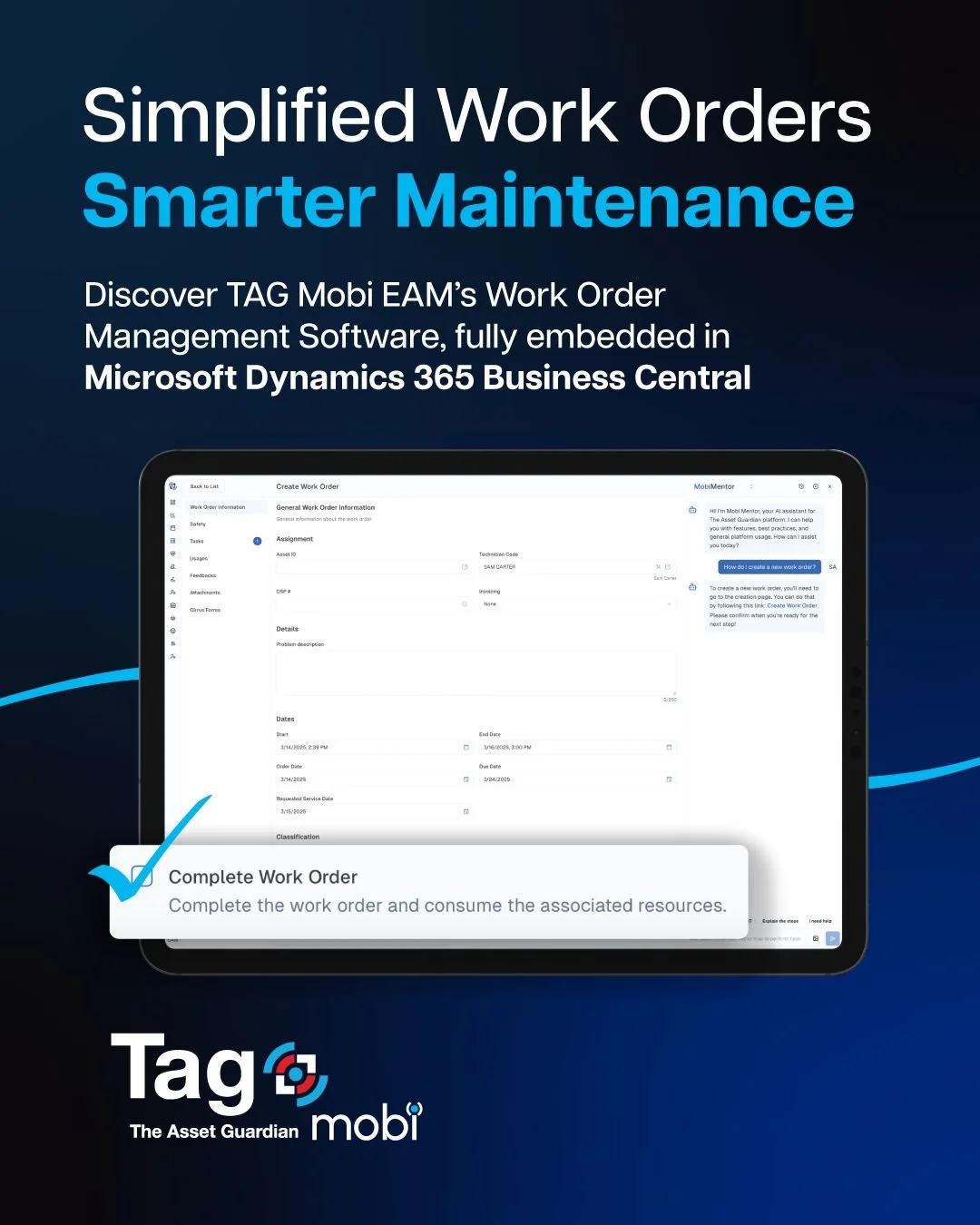
The next step is putting those decisions into practice. TAG Mobi EAM helps maintenance teams connect asset records, preventive and condition-based maintenance, inspections, work orders, parts, labor, costs, and maintenance history in one system. As work is completed, teams can use real maintenance data to evaluate results and continue improving their maintenance strategies.
See TAG Mobi in action to learn how it can help your team turn reliability analysis into an actionable maintenance program.
FAQ
What is FMEA?
FMEA is a structured method for identifying potential failure modes, their effects, causes, and controls. It helps teams evaluate and prioritize failure risks so they can determine where inspections, monitoring, process changes, or other actions may be needed.
What is RCM?
Reliability-centered maintenance (RCM) is a structured decision process used to determine how asset failures should be managed. It considers asset functions, failure modes, consequences, and the effectiveness of potential maintenance tasks to select an appropriate maintenance strategy.
What is the difference between FMEA and RCM?
The main difference between FMEA and RCM is their purpose. FMEA identifies and prioritizes potential failure modes, while RCM determines how those failures should be managed. In simple terms, FMEA helps answer “What can fail and what is the risk?” while RCM helps answer “What should we do about it?”
How does FMEA support RCM?
FMEA can provide structured information about failure modes, causes, effects, controls, and risk. Maintenance teams can use this information as an input to RCM when evaluating failure consequences and determining whether preventive maintenance, condition-based maintenance, failure-finding, redesign, or run-to-failure is appropriate.
When should maintenance teams use FMEA vs RCM?
Use FMEA when the primary goal is to identify and prioritize failure risks. Use RCM when the goal is to determine the most appropriate maintenance strategy for important assets and failure modes. Teams can also use both together, with FMEA providing failure information that supports the RCM decision process.