What Is FMEA? A Guide for Maintenance and Reliability Teams
Learn how FMEA helps maintenance and reliability teams identify failure modes, assess risk, prioritize maintenance actions, and support better asset reliability decisions.
What you will learn in this article:
What FMEA is and what FMEA means for maintenance and reliability teams
How FMEA is used in maintenance and manufacturing
How to perform an FMEA analysis using severity, occurrence, and detection
What to include in an FMEA template for maintenance teams
How FMEA supports reliability-centered maintenance and broader asset management decisions
How work orders, condition data, and failure history can help keep FMEA analysis current
Maintenance and reliability teams need structured ways to anticipate equipment failures before they lead to downtime, safety issues, or production losses. Failure Mode and Effects Analysis, or FMEA, is a systematic method for identifying potential equipment or process failures, evaluating their effects, and prioritizing actions to reduce risk.
FMEA can begin during the design of a product or system and continue throughout its operating life. For maintenance, manufacturing, and reliability teams, it helps direct resources toward the failure modes that present the greatest risk.
This article explains FMEA meaning, how FMEA is used in maintenance and manufacturing, how the analysis works, and how it can support broader reliability and maintenance strategies.
What is FMEA?
FMEA stands for Failure Mode and Effects Analysis. It is a systematic technique used to identify potential failure modes, understand their causes and effects, and evaluate risk so teams can prioritize actions.
The core purpose is to turn failure information into a structured analysis that helps teams reduce operational risk.
Failure mode: The way an asset, component, process, or function could fail.
Effects analysis: The evaluation of what happens when that failure occurs, including potential impacts on operations, safety, quality, the environment, or customers.
What is FMEA maintenance?
MEA in maintenance focuses on equipment functions, potential failure modes, their consequences, and the controls that can prevent or detect them. It helps teams determine where preventive maintenance, condition monitoring, spare parts, operating controls, or redesign may be needed to reduce downtime and risk.
What is FMEA in manufacturing?
FMEA in manufacturing applies the same structured method to production processes, assemblies, and product functions. It focuses on process failures, defects, existing controls, and their potential impact on production and customers.
The results can lead to actions such as process changes, improved inspection, tighter controls, or supplier improvements to reduce scrap, rework, quality problems, and safety risk.
How does FMEA analysis work?
FMEA analysis works by defining an asset or process, identifying its functions and potential failure modes, documenting causes and effects, evaluating risk, and identifying actions that can reduce that risk.
Practical FMEA workflow step by step
Define the scope and team: Select the asset, process, or system and involve the appropriate engineers, operators, and maintainers.
Identify functions: Document what the asset or process must accomplish, such as maintaining flow, pressure, speed, or a safety function.
Identify failure modes: Describe how each function could fail, such as leaking, seizing, overheating, or providing degraded performance.
Document effects and causes: Record the operational, safety, quality, and environmental effects and the potential causes of each failure.
Review current controls: Identify inspections, sensors, alarms, procedures, or other controls already used to prevent or detect the failure.
Evaluate risk and recommend actions: Score severity, occurrence, and detection, then prioritize maintenance, monitoring, redesign, or other improvements.
Implement and reassess: Complete the recommended actions and reevaluate the risk based on the updated controls and operating experience.
What should your FMEA template include?
A practical FMEA template should capture the information needed to analyze risk and track recommended actions.
Function
Failure mode
Effect
Cause
Current controls
Severity
Occurrence
Detection
RPN/AP
For maintenance applications, the record can also be linked to the asset or subsystem and include revision history so teams can trace actions, changes, and reassessments over time.
How do you score severity, occurrence, and detection?
FMEA teams evaluate each failure using defined scoring criteria so risks can be compared consistently.
Severity (S): Measures the seriousness of the failure effect. Higher scores represent more significant consequences.
Occurrence (O): Measures how likely the cause or failure is to occur. Maintenance teams can use failure history, work orders, and reliability data to support this rating.
Detection (D): Measures how likely existing controls are to detect the problem before the failure effect occurs. Effective sensors, inspections, and monitoring can improve detectability.
Many FMEA methods use 1–10 scoring scales, but the criteria should be clearly defined so different people evaluate risk consistently.
A common calculation is the Risk Priority Number (RPN):
RPN = Severity × Occurrence × Detection
RPN can help rank risks, but teams should not rely on the number alone. High-severity failures may still require action even when their overall RPN is not among the highest.
Some FMEA methodologies use other prioritization methods. For example, the AIAG-VDA automotive methodology uses an Action Priority (AP) approach that evaluates severity, occurrence, and detection together and assigns a High, Medium, or Low priority.
How does FMEA help prioritize maintenance resources?
FMEA identifies higher-risk failure modes so maintenance teams can focus time and budget where interventions can have the greatest impact.
The results can help teams:
Prioritize preventive maintenance for significant failure risks
Add condition monitoring where deterioration can be detected before functional failure
Stock critical spare parts where failure consequences and replacement lead times justify it
Recommend redesign or additional controls for unacceptable risks
Consider run-to-failure where consequences are low and proactive maintenance is not justified
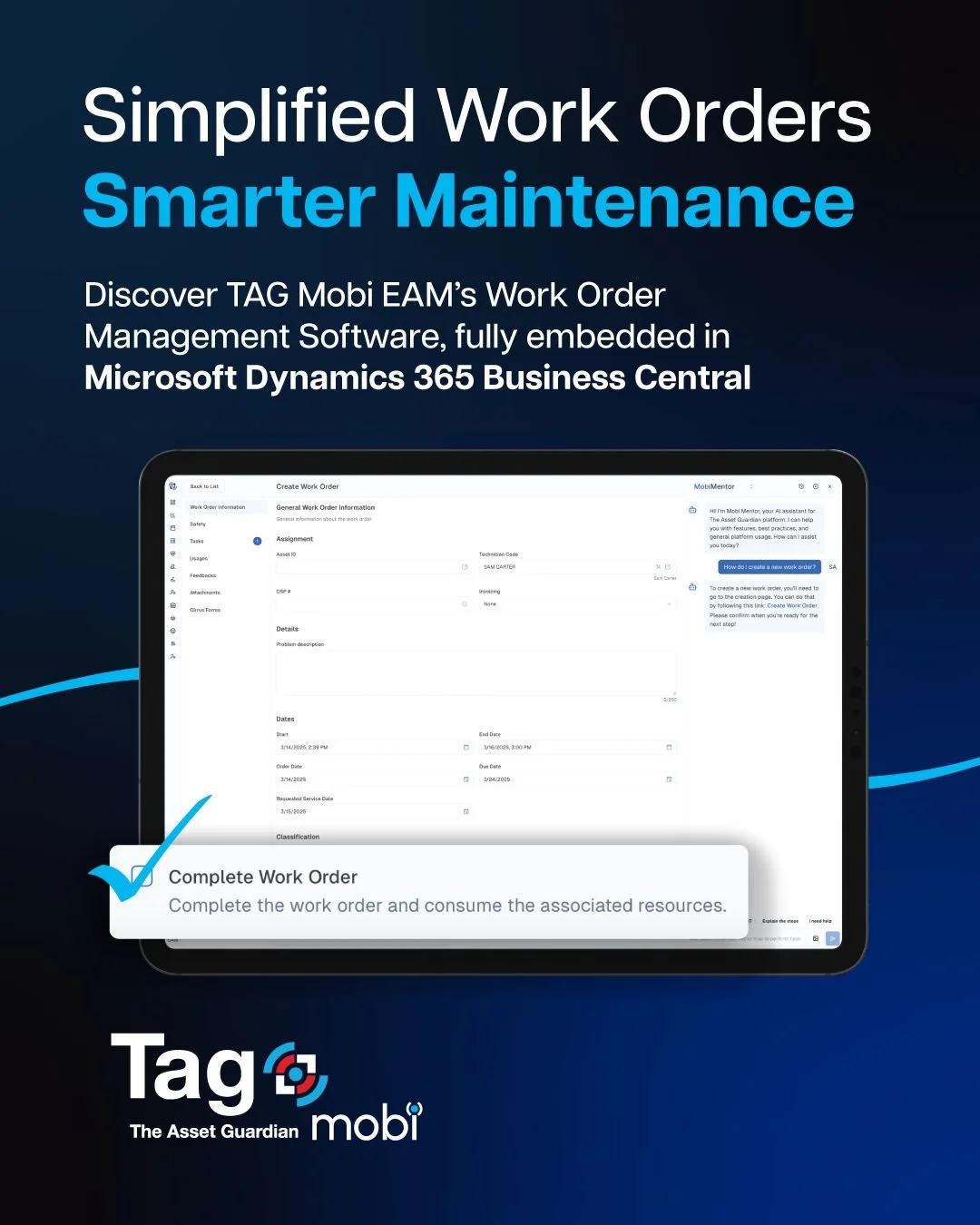
This is where FMEA connects directly with enterprise asset management (EAM). Once a team identifies its highest-risk failure modes, those findings can inform preventive maintenance plans, inspections, condition monitoring, spare parts requirements, and other asset management decisions. An EAM system helps put those decisions into practice and track the resulting maintenance activity over time.
Recommended FMEA actions can then be linked to work orders, inspections, or maintenance plans within the EAM system. Completed work, equipment condition, and subsequent failure history provide new information for future FMEA reviews.
How does FMEA support reliability-centered maintenance
FMEA provides information about functions, failure modes, causes, effects, and risk that can support reliability-centered maintenance (RCM).
RCM takes that information further by evaluating the consequences of failure and determining what maintenance approach is technically appropriate and worth performing. Depending on the failure mode, the result may be condition-based maintenance, scheduled maintenance, redesign, operating controls, failure-finding tasks, or run-to-failure.
FMEA and RCM are therefore complementary rather than interchangeable. FMEA helps teams understand potential failures; RCM uses failure and consequence information as part of a broader maintenance decision process.
When should you update an FMEA?
FMEA should be updated when equipment, operating conditions, failure history, or existing controls change.
Common triggers include:
A new or recurring failure appearing in work-order history
New sensors, inspections, or maintenance procedures
Equipment, design, or process changes
Significant changes in load or operating conditions
New condition-monitoring or failure data
For maintenance teams, FMEA becomes more useful when it is connected to actual asset history. Data captured in an EAM system, including work orders, failure codes, inspections, and equipment condition, can provide evidence for reassessing occurrence and detection ratings.
Version control should also be maintained so each revision documents what changed and why.
Failure Mode and Effect Analysis example
The following simplified example shows how a maintenance team could evaluate shaft seal leakage on a pump. The scores are illustrative and should be based on the organization’s defined FMEA criteria.
After the recommended actions are implemented, the team should reassess the failure mode to determine whether the risk has been reduced.
Turn FMEA findings into maintenance action
FMEA gives maintenance and reliability teams a structured way to identify potential failures, evaluate their risk, and prioritize the actions that matter most. Its value increases when the analysis is kept current using actual work-order history, inspections, failure data, and equipment condition.
TAG Mobi helps maintenance teams connect asset records, work orders, maintenance history, inspections, parts, and condition data in one EAM environment. This gives teams better operational information to support reliability analysis and a clearer way to turn approved FMEA recommendations into maintenance action.
Learn more about TAG Mobi and how it can support a more proactive maintenance strategy.
FAQ
What is FMEA in maintenance?
FMEA in maintenance is a structured method for identifying how equipment can fail, what causes those failures, what their effects could be, and what controls are already in place. Teams use this information to prioritize maintenance and reliability actions based on risk.
How do you perform an FMEA analysis?
Start by defining the asset or process and its functions. Identify potential failure modes, effects, causes, and current controls. Score severity, occurrence, and detection using defined criteria, prioritize the risks, recommend actions, and reassess the analysis after improvements are implemented.
How does FMEA support reliability-centered maintenance?
FMEA identifies the failure modes, causes, effects, and risks that can be used during reliability-centered maintenance analysis. RCM then evaluates failure consequences and applies decision logic to determine whether condition-based maintenance, scheduled maintenance, redesign, failure-finding, or run-to-failure is appropriate.